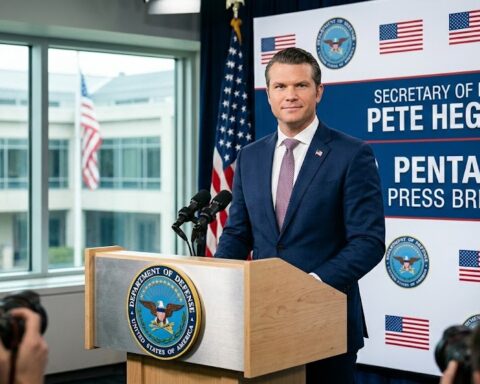
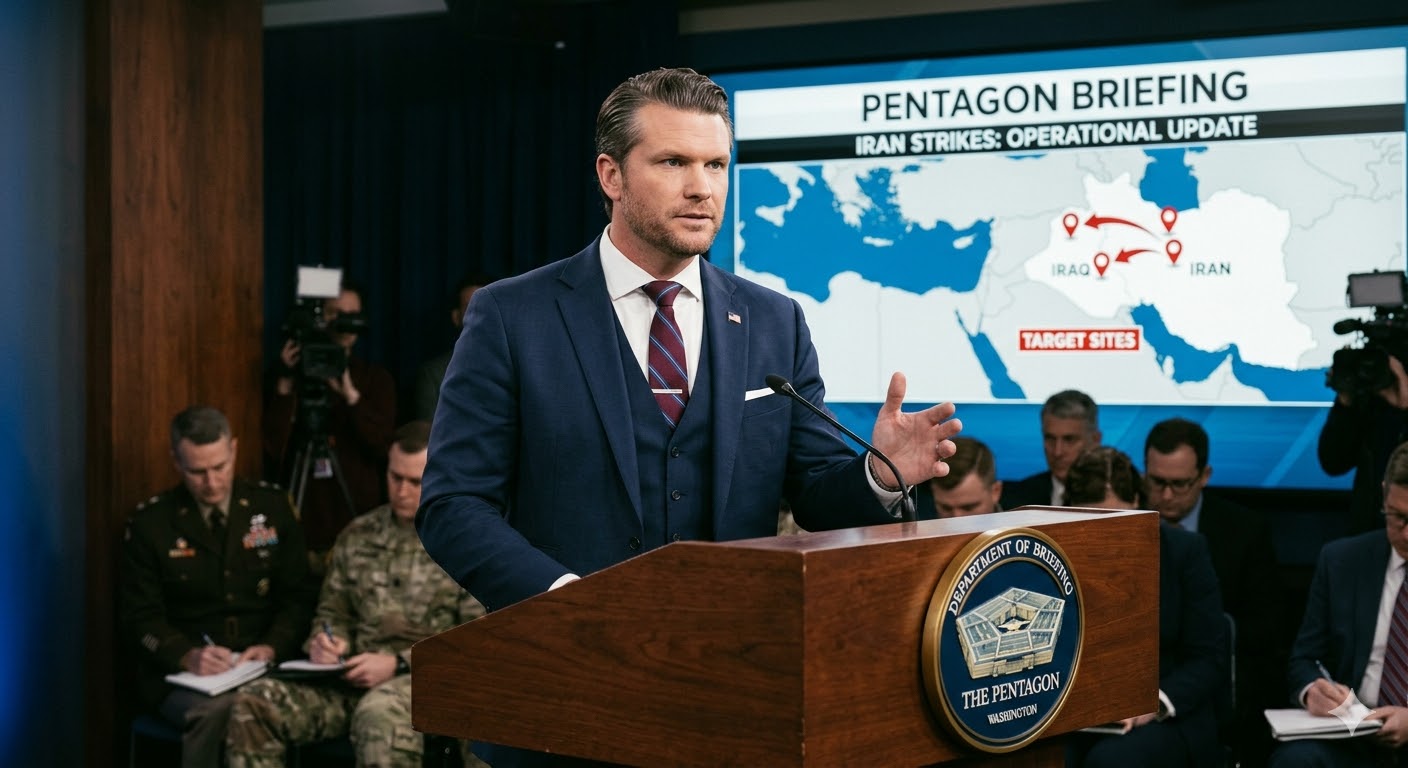
US Iran strikes intensified Tuesday after Pentagon chief Pete Hegseth warned that Washington would launch its “most intense day” of attacks against Tehran.
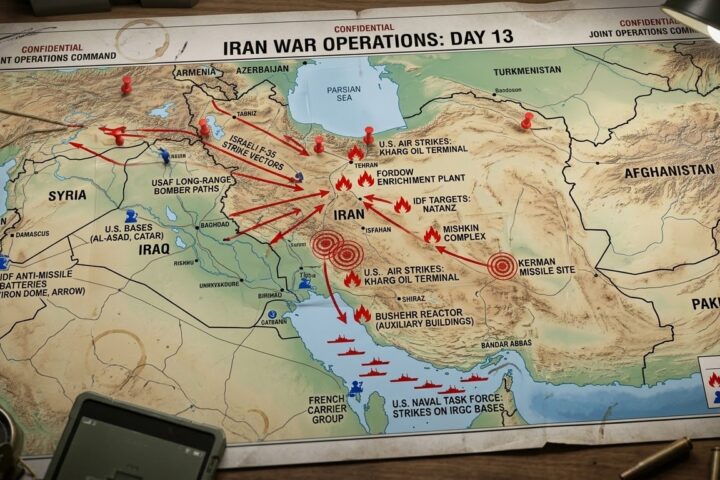
The announcement signals a major escalation in the expanding conflict between the United States, Israel and Iran.
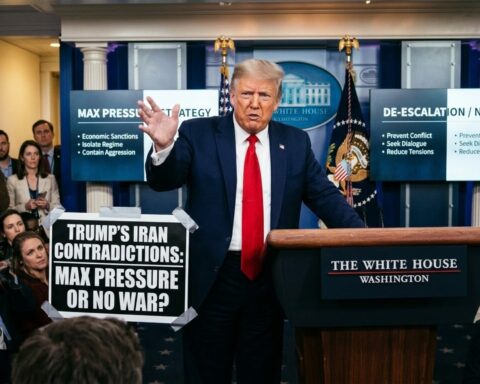
The WHITE HOUSE and the Pentagon have framed the campaign as a strategy to weaken Iran’s missile capabilities and prevent the country from developing nuclear weapons.
Meanwhile, Iranian officials continue to project defiance.
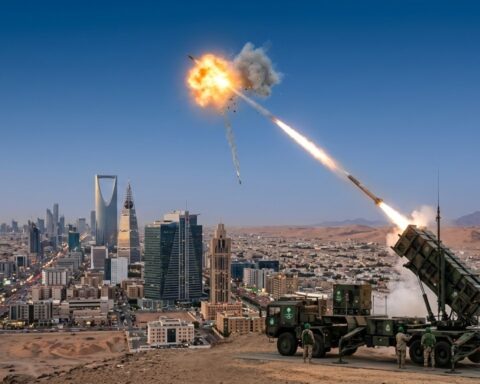
Tehran has launched missile and drone strikes across the region since the war began.
Pentagon outlines objectives of US Iran Strikes campaign
Pentagon chief Pete Hegseth outlined three primary goals for the ongoing military campaign.
According to the United States Department of Defense, US forces aim to:
- Neutralize Iran’s missile capabilities
- Destroy Iran’s naval forces
- Permanently block Iran from developing nuclear weapons
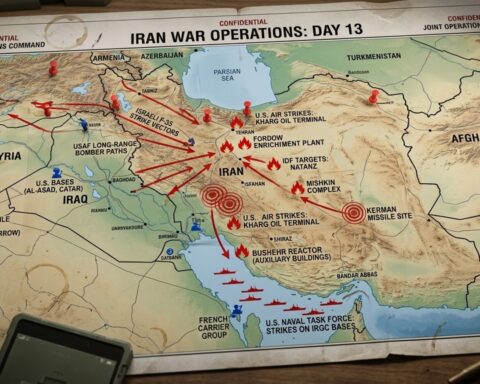
Hegseth indicated that US forces will intensify bombing operations across multiple Iranian targets.
Military planners expect a surge in:
- Fighter jet deployments
- Strategic bomber missions
- Precision strike operations
Defense officials describe the next phase as the largest single day of US air strikes since the war began.
Iran responds with regional missile attacks
Iranian leaders have rejected Washington’s claims of battlefield dominance.
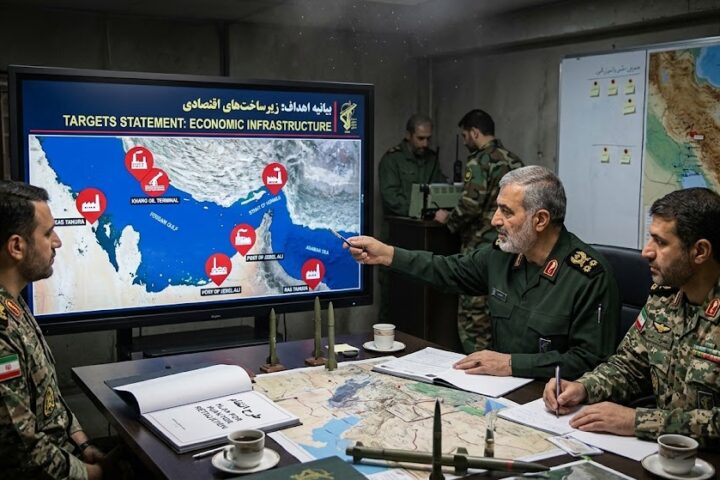
Officials in Tehran have vowed to continue attacks against US and Israeli targets across the Middle East.
Iran has launched:
- Ballistic missiles toward Israel
- Drone attacks across Gulf states
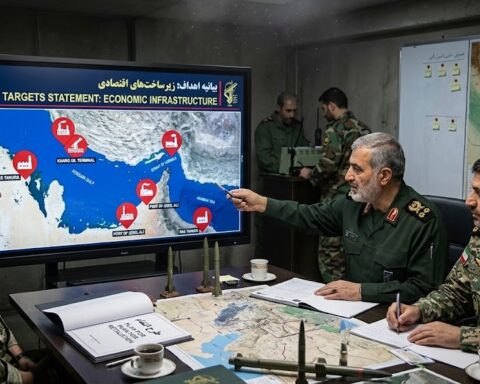
- Strikes targeting regional energy infrastructure
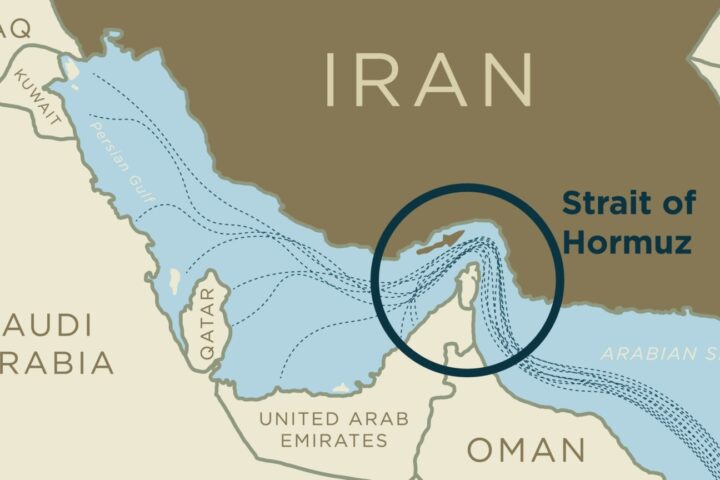
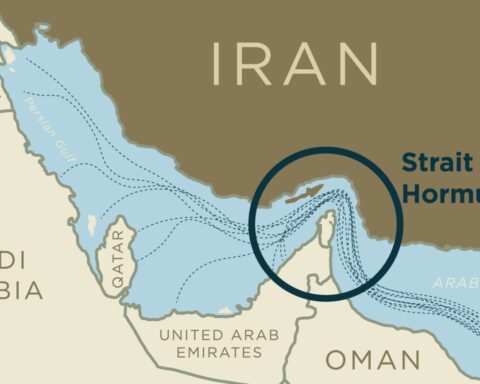
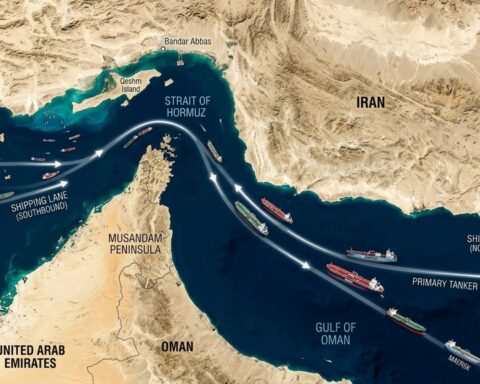
Iranian forces have also targeted shipping routes near the Strait of Hormuz, a critical global oil corridor.
The disruption has raised concerns in global energy markets.
Strait of Hormuz crisis raises global economic concerns
Military operations near the Strait of Hormuz have created significant risks for global trade.
The narrow waterway carries roughly one-fifth of the world’s oil supply.
US military leaders have begun targeting vessels suspected of laying naval mines in the Gulf.
According to senior US commanders, options remain under review to escort commercial tankers if shipping disruptions worsen.
Such a move would place US naval forces directly inside one of the most sensitive maritime chokepoints in the world.
Trump administration controls timeline of US Iran strikes campaign
Officials stress that the final timeline for the war rests with Donald Trump, who currently directs US military policy.
Pentagon leadership confirmed that the president determines when the campaign will expand or slow down.
At the same time, Israel continues to pursue separate military objectives.
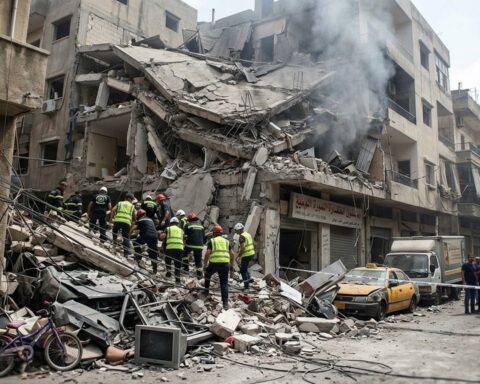
Israeli forces recently targeted Iranian energy depots in Tehran, triggering large fires across parts of the capital.
US defense officials clarified that those strikes did not represent a core American objective.
Instead, Washington remains focused on dismantling Iran’s military capabilities.