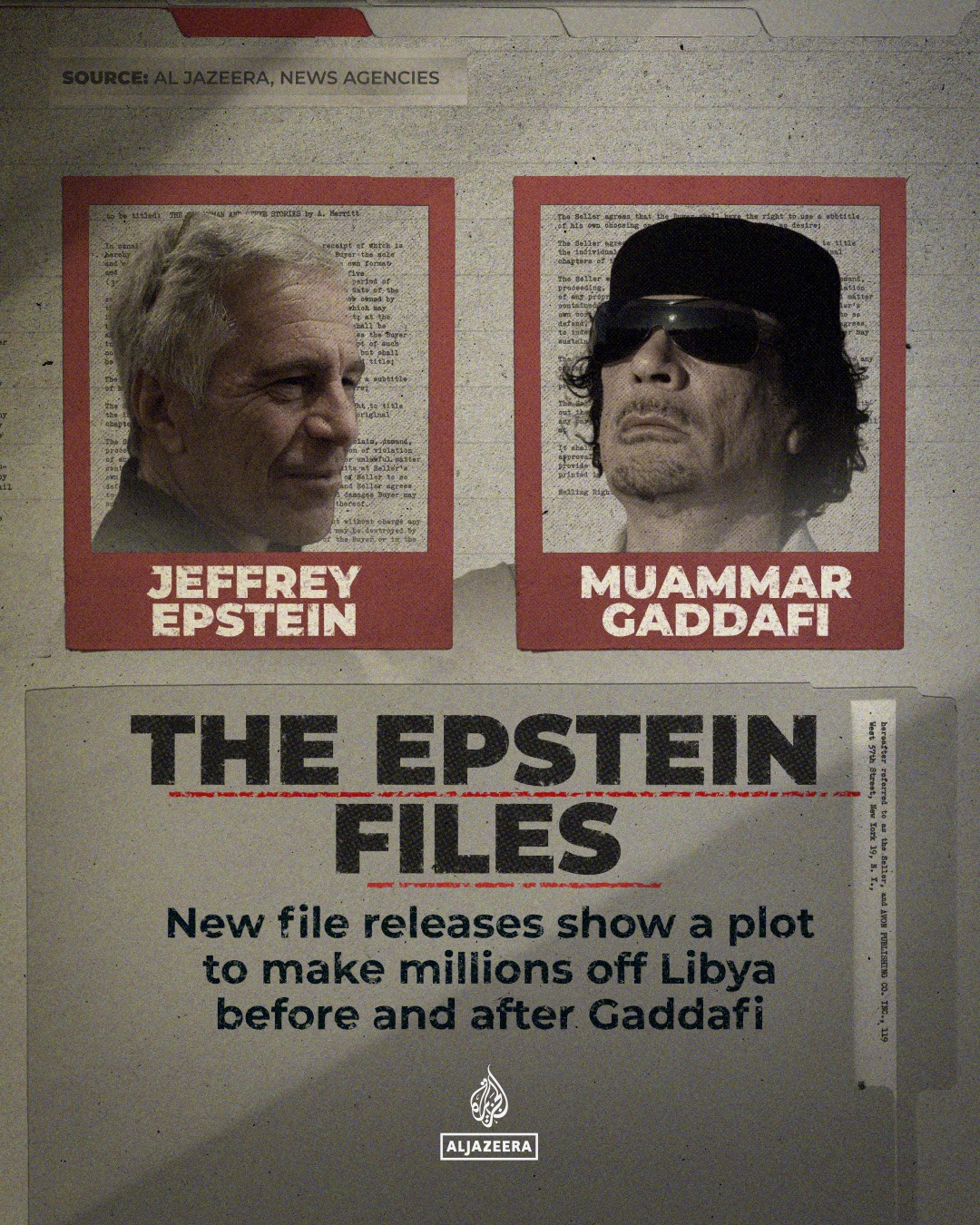
Newly released records show that an associate of Jeffrey Epstein outlined plans to pursue access to Libya’s frozen state assets during political unrest in 2011.
The U.S. Department of Justice released the documents Friday. They include an internal email sent directly to Epstein.
The email describes financial and legal strategies linked to instability in Libya after the uprising against longtime leader Muammar Gaddafi.
Email Details Financial Strategy During Libya Crisis
The email dates to July 2011, months after the NATO-backed revolt began. Libyan rebels later killed Gaddafi in October of that year.
In the message, the sender estimated that governments worldwide had frozen about $80 billion in Libyan funds. The email placed roughly $32.4 billion of that total in the United States.
The sender also claimed the true value of frozen or misappropriated Libyan assets could far exceed official estimates.
The document outlines several projections:
- The total amount could reach three to four times reported figures
- Recovering 5% to 10% of the assets could generate billions
- Compensation fees could range from 10% to 25%
Email Mentions Former Intelligence Contacts
The email references potential assistance from individuals described as former members of British and Israeli intelligence services.
According to the document, some former officials linked to:
- Britain’s MI6
- Israel’s Mossad
had expressed interest in helping identify and recover what the sender described as stolen Libyan assets.
The documents do not show that intelligence agencies approved or supported the effort.
Libya’s Reconstruction Seen as Long-Term Opportunity
The email also describes Libya’s future rebuilding needs as a major opportunity.
The sender projected that Libya would need to spend at least $100 billion on reconstruction and economic recovery.
The message frames this spending as a chance to secure long-term advisory roles.
The email highlights Libya’s:
- Large energy reserves
- High literacy rates
- Demand for legal and financial services
Law Firms Discussed Contingency-Based Work
The email states that the sender had already contacted international law firms.
According to the document:
- Some firms agreed to work on a contingency-fee basis
- Payment would depend on successful asset recovery
- The approach aimed to reduce upfront risk
What the Records Confirm and What They Do Not
The documents show planning and internal discussion. They do not show completed deals.
The records do not confirm that:
- Epstein or his associates accessed Libyan funds
- Any assets were recovered
- Governments approved the proposals
The email reflects exploratory planning during a period of international uncertainty.
Justice Department records show that an Epstein associate explored plans to access Libya’s frozen assets during the 2011 crisis, underscoring how political instability attracted private financial interest.