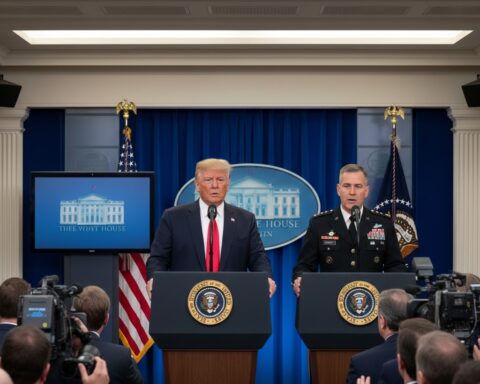
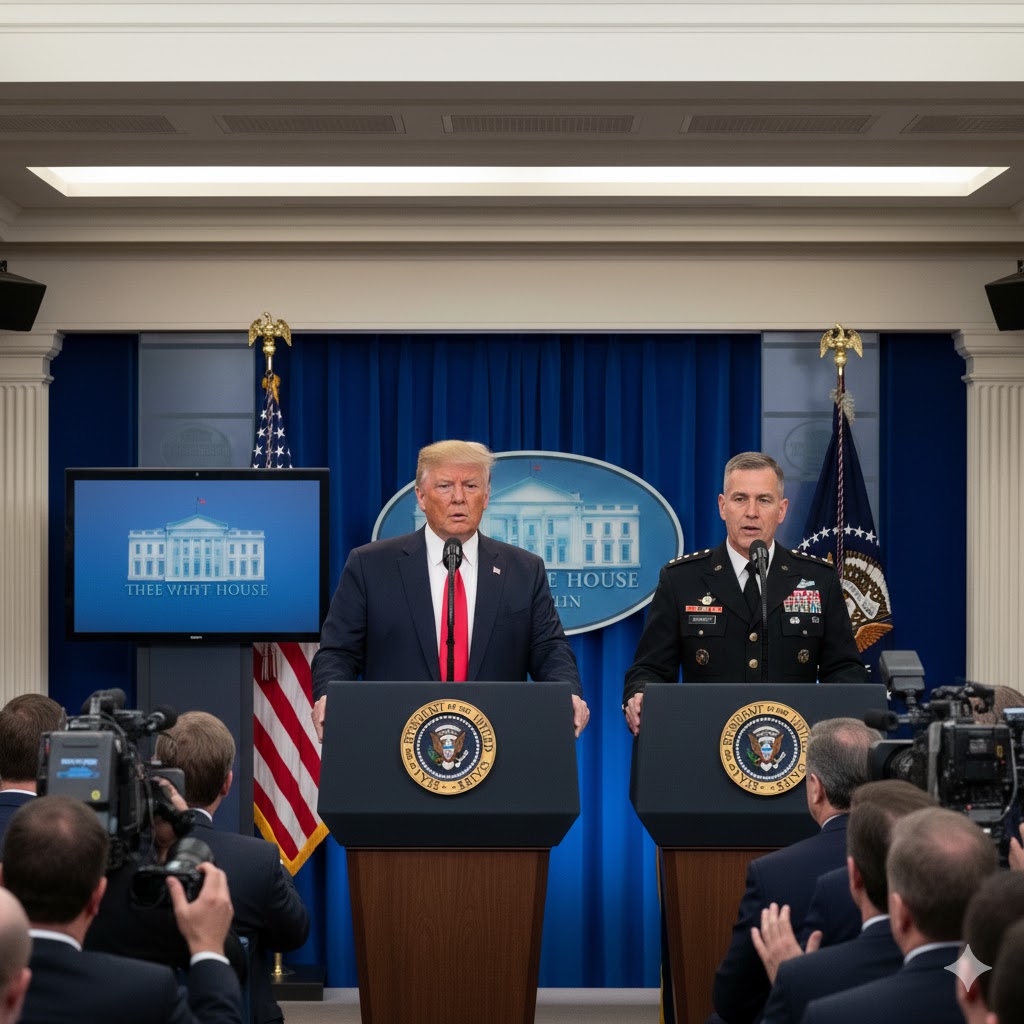
Chairman of the Joint Chiefs Gen. Dan Caine is quietly drafting expanded Iran strike options for President Donald Trump inside the Pentagon.
At the same time, he is privately warning senior Army, Navy, and Air Force commanders about the operational scale, escalation risks, and potential casualties tied to any Trump Iran war plan.
According to ten current and former officials, Caine now holds one of the most sensitive roles in Washington.
He must present detailed Iran military strike options to Trump while also outlining the real risks of a broader Middle East conflict.
As a result, Pentagon Iran military planning in 2026 has entered a critical phase.
Caine Summons Top Generals to His Office Bypassing the Pentagon’s Secure ‘Tank’ to Avoid Leaks
As Gen. Dan Caine refined Joint Chiefs Iran strike options, he deliberately avoided the Pentagon’s secure conference room known as “the Tank.”
Traditionally, the Tank hosts top-level war planning sessions. However, assembling generals there would signal that major Iran war planning was underway.
Instead, Caine summoned senior commanders privately to discuss the Trump Iran war plan and Iran nuclear strike options.
He made this move for two reasons.
First, gathering military leadership in the Tank would immediately raise concerns about imminent U.S. military action against Iran.
Second, ongoing leak investigations inside the Pentagon made discretion essential.
During those closed-door meetings, Caine emphasized three central risks tied to the Pentagon Iran military strike plan:
- The difficulty of destroying Iran’s hardened nuclear facilities
- The high likelihood of U.S. casualties after Iranian retaliation
- The unpredictability of any Iran regime change strategy
These warnings reportedly dominated a lengthy Situation Room session focused entirely on Iran strike options and escalation scenarios.
While Trump publicly projects confidence, internal Joint Chiefs Iran strategy discussions remain far more cautious.
Trump Posts Support for Caine on Social Media — Calls Iran War ‘Something Easily Won’
As reports surfaced about Pentagon Iran war risks, Trump publicly defended Gen. Dan Caine and described a potential Iran conflict as “something easily won.”
However, Joint Staff officials clarified that Caine presents a full spectrum of Iran strike options.
He outlines best-case and worst-case outcomes, including the long-term consequences of Iran nuclear strikes and regional escalation.
The White House also confirmed that Caine provides unbiased military advice regarding the Trump Iran war plan.
Therefore, although public messaging emphasizes strength, Pentagon Iran military planning continues to account for serious battlefield risks.
Iran Strike Options on the Table: Ballistic Missile Sites, Nuclear Facilities, and Regime Change Planned Alongside Geneva Diplomacy
Over several weeks, Trump requested expanded Iran strike options from the Pentagon.
Consequently, the Joint Chiefs developed multiple operational frameworks under the Trump Iran war plan.
These include:
- Precision strikes on ballistic missile launch sites
- Targeted attacks on Iranian nuclear facilities
- Broader Iran nuclear strike options aimed at degrading enrichment capacity
- A potential regime change pathway targeting senior Iranian leadership
However, during strategic briefings, Gen. Dan Caine reportedly stressed that regime change operations carry extreme unpredictability and long-term instability risks.
Meanwhile, diplomatic efforts continue in Geneva. Yet even as negotiations proceed, the Pentagon has accelerated Middle East military buildup 2026 preparations.
Carrier strike groups, including the USS Abraham Lincoln and USS Gerald R. Ford, now operate in the region as visible deterrence.
This dual approach underscores current Pentagon Iran military planning: prepare for war, but leave space for diplomacy.
How Caine Avoids the Milley Trap — ‘Don’t Cheer, Don’t React’
The shadow of past military leadership disputes continues to influence Gen. Dan Caine’s approach to the Trump Iran war plan.
Unlike previous public clashes between the White House and Pentagon leaders, Caine maintains strict discipline.
He avoids public political commentary and focuses exclusively on Joint Chiefs Iran strategy and operational planning.
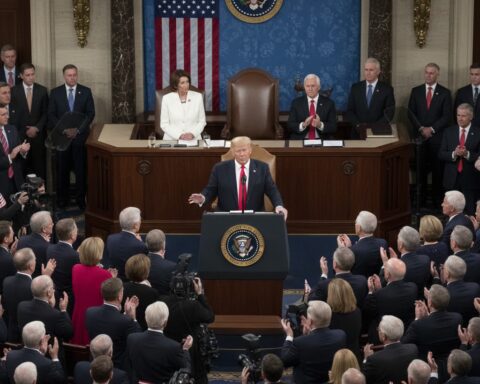
Before a presidential address at the Pentagon, Caine reportedly instructed senior officers: “Don’t cheer. Don’t react.”
Remain professional. Remain neutral.
That guidance reflects Caine’s broader objective of protecting institutional credibility while managing sensitive Iran strike option discussions.
Caine Outranks Hegseth in Trump’s Inner Circle But Loses Personnel Battles to the Defense Secretary
Sources indicate that Trump frequently consults Gen. Dan Caine directly regarding Iran military strike options and broader Pentagon Iran military planning.
However, internal personnel decisions remain under the authority of Defense Secretary Pete Hegseth.
Caine attempted to slow the removal of senior officers during a period of strategic restructuring. Despite those efforts, several top commanders departed.
These internal shifts add another layer of complexity to Joint Chiefs Iran strategy deliberations in 2026.
Caine Clashes With Hegseth Over National Defense Strategy Warns China Threat Is Being Underplayed
Although much attention centers on Iran strike options, Gen. Dan Caine has also warned about shifting global threats.
In private memos, he expressed concern that revised national defense strategy documents underplay China’s long-term military challenge.
Nevertheless, Iran remains the immediate operational focus.
Pentagon Iran military planning currently prioritizes readiness for possible nuclear strike contingencies and regional escalation scenarios.
Stephen Miller Phones Caine Directly Military Operations Inside the U.S. and Latin America Coordinated With Trump Deputy Chief of Staff
Gen. Dan Caine’s role extends beyond overseas operations.
Deputy Chief of Staff Stephen Miller reportedly contacts him directly to coordinate military deployments and internal security operations. This underscores how central Caine has become to White House national security planning.
At the same time, his primary task remains clear: refine and evaluate Iran strike options under the Trump Iran war plan framework.
Caine’s Unusual Rise: Promoted Over 38 Active Four-Star Generals Recalled From Retirement by Trump
Caine’s elevation to Chairman of the Joint Chiefs surprised many inside the Pentagon.
Trump recalled him from retirement and promoted him above dozens of eligible four-star generals. Now, he oversees the most consequential Pentagon Iran military planning cycle in years.
His confirmation testimony emphasized civilian control of the military and constitutional obligations, principles that guide his handling of Iran nuclear strike options today.
Caine Led Venezuela Maduro Capture Briefing and Pushed Back on Trump’s ‘Total Obliteration’ Claim on Iran Nuclear Strikes
Gen. Dan Caine previously briefed the nation on major operations, including the capture of Nicolás Maduro.
More recently, he clarified technical details surrounding Iran nuclear strike options after public claims described them as “total obliteration.”
However, updated intelligence assessments suggest Iran retains nuclear development capabilities.
That reality intensifies pressure around Joint Chiefs Iran strategy and Pentagon Iran military planning decisions.
‘Moral Injury’ Among Senior Military Leaders — Officials Warn Caine’s Silence Has Its Own Cost
Inside the Pentagon, debate continues.
Some senior leaders argue that Gen. Dan Caine’s disciplined silence protects military professionalism during volatile Trump Iran war plan discussions.
Others worry that prolonged internal pressure, personnel shifts, and escalating Iran strike options planning risk institutional strain.
Ultimately, the 2026 Middle East military buildup and Trump Iran war plan decisions will define both U.S. strategy — and Caine’s legacy.
Sources: CNN