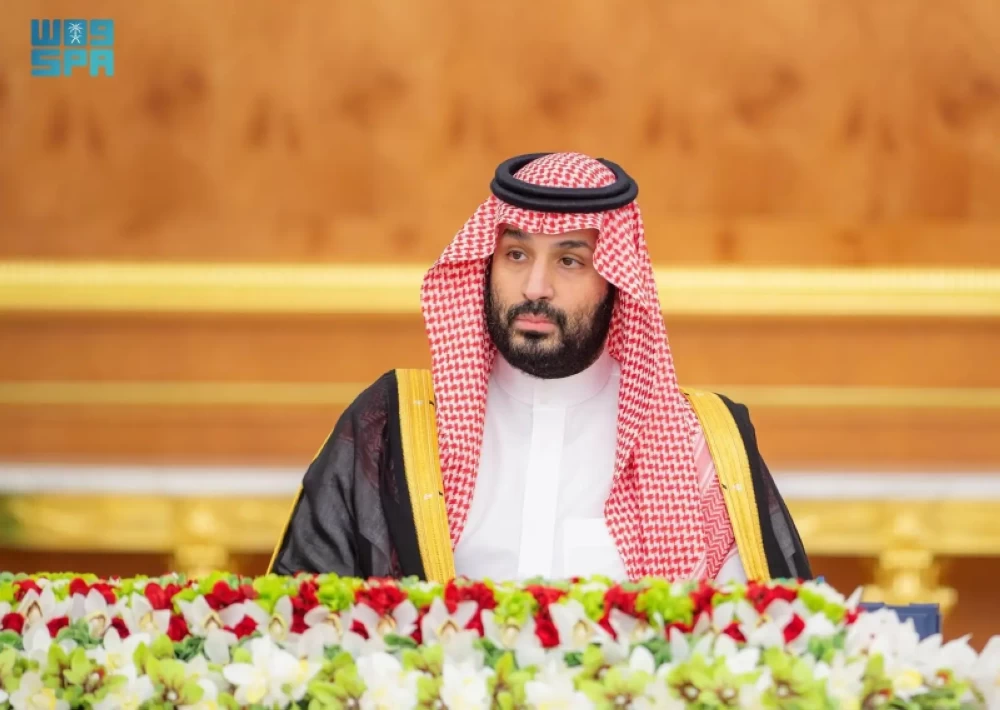
Crown Prince and Prime Minister Mohammed bin Salman chaired the Saudi Council of Ministers in Jeddah on Tuesday.
During the session, the Cabinet reaffirmed Saudi Arabia’s commitment to regional and global security.
Moreover, the Council approved a wide range of international agreements. These agreements covered security, health, investment, space cooperation, aviation, and environmental protection.
Key partners included Pakistan, Armenia, Estonia, Kazakhstan, Kyrgyzstan, Turkmenistan, Oman, Cuba, and Kiribati.
In addition, the Cabinet approved a major domestic reform. It merged two national economic bodies into the new Saudi Center for Competitiveness and Business.
Crown Prince Briefs Cabinet on Sisi Meeting and Message from Kazakhstan’s Tokayev
At the start of the session, Mohammed bin Salman briefed ministers on his recent meeting with Egyptian President Abdel Fattah El-Sisi.
The leaders focused on three priority areas:
- Strengthening Saudi-Egyptian relations across economic, political, and cultural sectors
- Addressing key Arab and Islamic world issues, including humanitarian crises
- Coordinating efforts to preserve Middle East security and stability
Furthermore, the Crown Prince shared details of a message from Kazakhstan President Kassym-Jomart Tokayev.
Saudi Arabia and Kazakhstan continue expanding economic and diplomatic ties. Notably, Riyadh has increased investments in Central Asia under Vision 2030.
Minister Al-Dossary: Cabinet Reviews Progress on Bilateral and Multilateral Cooperation
After the meeting, Minister of Media Salman Al-Dossary briefed the Saudi Press Agency.
He confirmed the Cabinet reviewed progress reports from joint cooperation committees. These committees oversee bilateral and multilateral agreements with allied nations and regional organizations.
Additionally, ministers reviewed domestic development reports. The Cabinet praised public participation in national charitable campaigns.
Officials stated these initiatives are delivering measurable humanitarian results across Saudi regions.
Saudi Arabia Signs Security and Interior MOUs With Pakistan and Political Consultations Agreement With Armenia
The Cabinet approved two major security agreements.
First, the Minister of Interior received authorization to negotiate and sign an MOU with Pakistan’s Ministry of Interior.
The agreement strengthens cooperation in training, scientific research, and law enforcement coordination.
Second, the Cabinet approved an MOU on political consultations with Armenia’s Ministry of Foreign Affairs. This agreement formalizes structured diplomatic dialogue between Riyadh and Yerevan.
In addition, the Cabinet authorized the King Abdulaziz Foundation for Research and Archives (Darah) to sign a cooperation agreement with Kyrgyzstan’s Ministry of Digital Development.
The agreement promotes archival research and digital heritage exchange.
Saudi Arabia and Estonia Sign Direct Investment MOU — Expanding Gulf-European Economic Ties
The Cabinet approved a direct investment MOU with Estonia.
This agreement promotes bilateral investment and technology cooperation. Estonia brings advanced expertise in e-governance, fintech, and cybersecurity.
These sectors align directly with Saudi Arabia’s Vision 2030 diversification strategy.
As a result, the Saudi-Estonia agreement strengthens Gulf-European economic ties and broadens the Kingdom’s investment base.
Saudi-Pakistan-Netherlands Trilateral Health MOU Signed — Covering Training, Research, and Health Systems Cooperation
The Cabinet also authorized a trilateral health MOU between Saudi Arabia, Pakistan, and the Netherlands.
The agreement covers:
- Joint research in infectious diseases and pandemic preparedness
- Medical training and professional exchange programs
- Health system modernization with Dutch public health expertise
Importantly, Saudi Arabia aims to expand its healthcare sector’s share of non-oil GDP under Vision 2030.
Therefore, this agreement supports long-term national health transformation goals.
Saudi Space Agency Gains Authority to Sign Outer Space Cooperation MOUs With Any Country
The Cabinet approved a standardized MOU model for outer space cooperation.
Crucially, the Council authorized the Saudi Space Agency to sign agreements directly with global counterparts without separate Cabinet approval for each deal.
As a result, Saudi Arabia can now accelerate international space partnerships.
Since its establishment in 2018, the Saudi Space Agency has expanded cooperation with leading global space powers.
This new framework strengthens the Kingdom’s position in peaceful space exploration.
Saudi Arabia Approves Air Transport Agreements With Kiribati and Cuba and Endowments MOU With Oman
The Cabinet approved new air transport agreements with Kiribati and Cuba.
These agreements open new aviation routes and support Saudi Arabia’s goal of becoming a global aviation hub handling 330 million passengers annually by 2030.
Meanwhile, the Cabinet approved an Awqaf cooperation MOU with Oman.
This agreement enhances coordination in managing Islamic endowment assets and maximizing humanitarian impact.
Saudi Arabia and Turkmenistan Sign Environment MOU — Covering Ecological Protection and Sustainability
The Cabinet authorized negotiations with Turkmenistan on environmental cooperation.
The agreement focuses on ecological protection and sustainability.
Saudi Arabia continues expanding its environmental diplomacy, particularly in regions facing desertification and water scarcity.
Programs such as the Saudi Green Initiative reinforce this commitment.
Saudi Cabinet Merges Two Economic Bodies, Creates Saudi Center for Competitiveness and Business
In the most significant domestic decision of the session, the Cabinet approved the merger of the National Competitiveness Center and the Saudi Center for Economic Business.
The new unified entity is the Saudi Center for Competitiveness and Business.
Key objectives include:
- Eliminating bureaucratic duplication
- Strengthening regulatory efficiency
- Improving Saudi Arabia’s global competitiveness rankings
- Advancing ease-of-doing-business reforms under Vision 2030
Additionally, the Cabinet extended the pilot phase of Official Communications and Documents Preservation Regulations for one year.
This measure modernizes government recordkeeping and strengthens administrative efficiency.