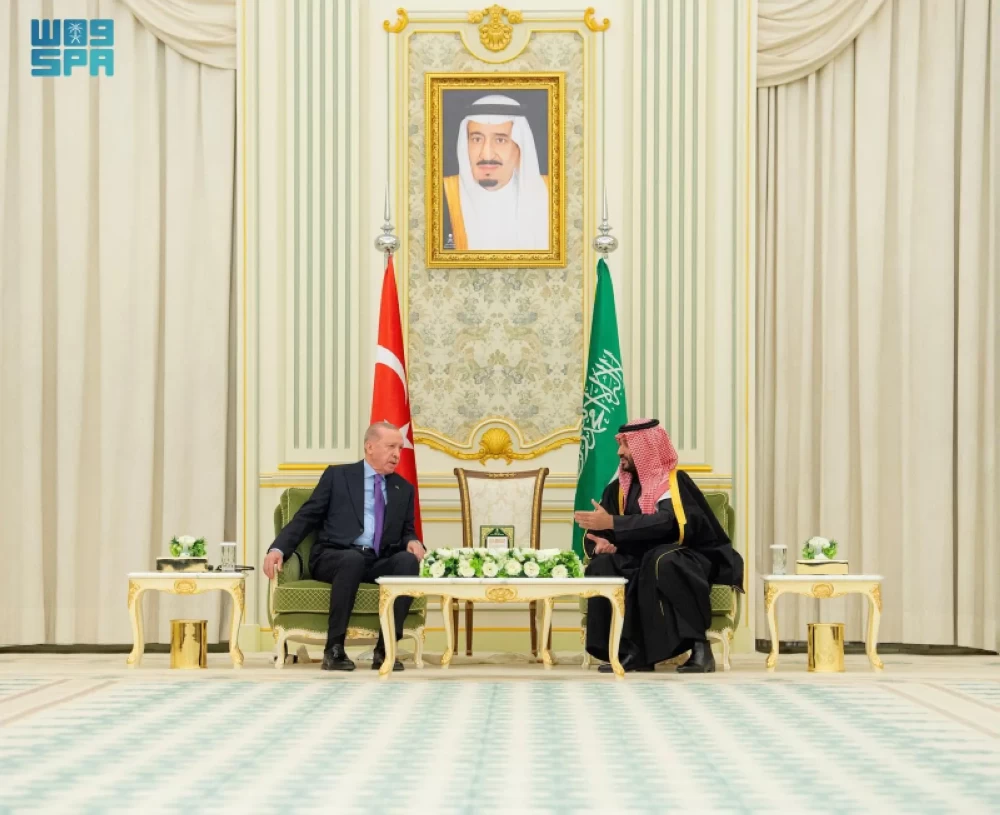
RIYADH — Saudi Arabia and Türkiye have reaffirmed their commitment to strengthening defense and security cooperation, following high-level talks in Riyadh during Turkish President Recep Tayyip Erdoğan’s official visit to the Kingdom.
In a joint statement released at the end of the visit, both countries agreed deeper cooperation would serve their shared interests and support regional security and stability.
They also stressed the importance of working through multilateral platforms.
Leaders Hold Talks in Riyadh
President Erdoğan met with Saudi Crown Prince and Prime Minister Mohammed bin Salman at Al-Yamamah Palace on Tuesday.
During the meeting, the two leaders:
- Reviewed long-standing bilateral relations
- Discussed ways to expand cooperation across multiple sectors
- Emphasized coordination on regional and global issues
Both sides agreed to activate existing defense agreements and accelerate their implementation.
Focus on Defense and Security Cooperation
Saudi Arabia and Türkiye highlighted the need to enhance coordination on shared security priorities.
These include:
- Combating terrorism and extremism
- Fighting organized crime
- Countering terrorist financing
- Expanding cybersecurity cooperation
- Increasing training and knowledge exchange
Both governments agreed that closer security ties would strengthen national and regional stability.
Economic and Trade Relations Gain Momentum
The joint statement praised strong economic ties and called for further growth in trade and investment.
Key points included:
- Expanding non-oil trade
- Increasing public and private sector visits
- Hosting joint trade events through the Saudi-Turkish Business Council
- Advancing negotiations on a free trade agreement between Türkiye and Gulf Cooperation Council states
Both sides also pointed to Saudi Vision 2030 and the Century of Türkiye Vision as major drivers of future cooperation.
Investment and Business Cooperation Expands
Officials welcomed growing investment flows between the two countries.
Saudi investments in Türkiye include:
- Finance and insurance
- Renewable energy
- Real estate
- Manufacturing and services
Meanwhile, Turkish companies continue to play a major role in Saudi Arabia, especially in:
- Construction and engineering
- Real estate development
- Manufacturing projects
Saudi officials praised Turkish firms for delivering major projects across the Kingdom.
Energy and Renewable Cooperation Deepens
Energy cooperation featured prominently in the talks.
Both sides agreed to:
- Expand cooperation in oil, petrochemicals, and derivatives
- Explore joint investments in petrochemicals and agricultural nutrients
- Support innovation in hydrocarbon use
The two countries also committed to working together on renewable energy, clean hydrogen, and electricity integration.
Cooperation on Minerals and Emerging Technologies
Saudi Arabia and Türkiye agreed to strengthen collaboration in:
- Mineral exploration and processing
- Critical minerals supply chains
- Joint ventures supporting the global energy transition
They also welcomed new agreements signed during the visit, covering energy, justice, space, and research and innovation.
Shared Views on Regional and Global Issues
Both countries reaffirmed their commitment to international peace and security.
They exchanged views on regional conflicts and rising tensions, stressing the importance of collective action and dialogue.
On Gaza, Saudi Arabia and Türkiye voiced deep concern over the humanitarian crisis. They called for:
- Unrestricted delivery of aid
- Protection of civilians
- Respect for international humanitarian law
Both sides also welcomed their participation in the Board of Peace initiative and expressed support for ongoing peace efforts.
Positions on Yemen and Syria
The two countries reaffirmed support for:
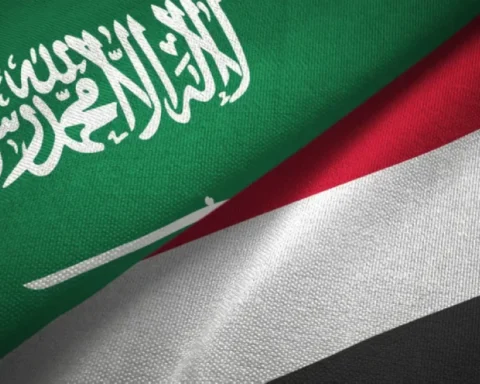
- Yemen’s internationally recognized government
- Yemen’s unity and territorial integrity
They praised efforts by Syria’s government to maintain security and stability.
Saudi Arabia and Türkiye are aligning defense, energy, and economic strategies to strengthen bilateral ties and play a larger role in shaping regional stability.