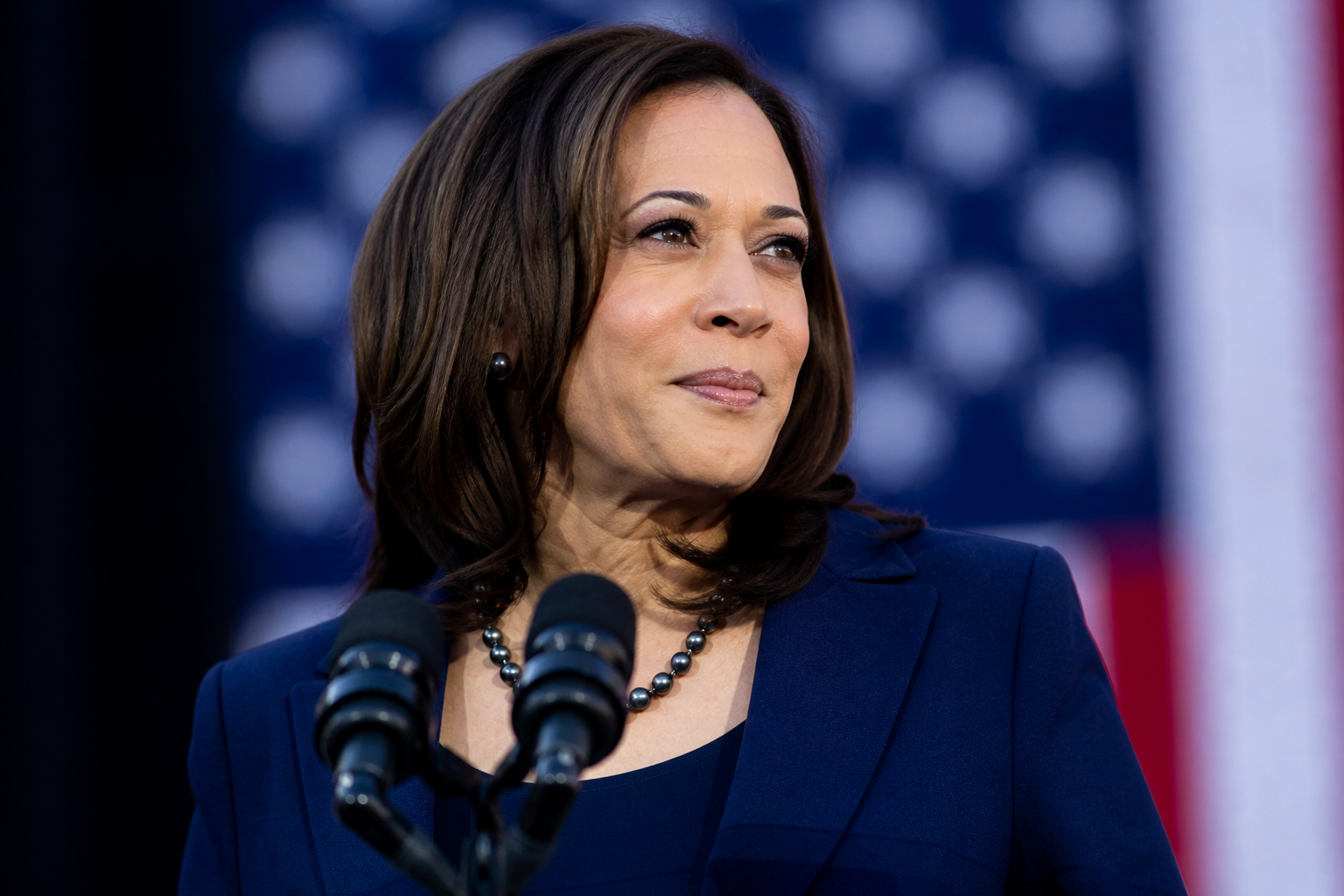
The Harris 2028 bid is already reshaping the Democratic presidential field, even before formal campaign announcements. The Harris 2028 bid has introduced new calculations for potential candidates, shifting strategy across the party as figures position themselves for a White House run.
Across Washington and key political states, early signals suggest a race that could center on experience, generational change, and shifting ideological lines. As a result, the Democratic field is no longer wide open. Instead, it is beginning to form around a few dominant forces.
Harris 2028 bid alters Democratic race structure
The possibility of a Harris 2028 bid has changed how Democrats approach the race.
- Former Vice President Kamala Harris holds national recognition
- Party networks remain accessible to her campaign
- Early support among key voter blocs gives her a base
If she enters the race, the contest may revolve around her candidacy. This pattern reflects past cycles where high-profile figures shaped early dynamics.
However, history shows that early frontrunners do not always secure the nomination. Still, Harris’ presence would define the opening phase of the campaign.
Voter base and coalition strength
The Harris 2028 bid draws potential strength from core Democratic voters.
- Strong backing among Black voters
- High engagement among women voters
- Established ties with party leadership
These groups play a decisive role in primary elections. Therefore, early consolidation could give Harris an advantage.
At the same time, voter expectations have shifted since the last election cycle. Many Democrats now seek forward-looking leadership, which may require Harris to refine her message.
Challenge of rebuilding after 2024 loss
A central question surrounding the Harris 2028 bid involves political recovery.
- Voters may remain cautious after the 2024 outcome
- Campaign messaging must evolve beyond past themes
- A new policy vision could become essential
Harris has spent months reconnecting with voters through public appearances and outreach. This effort suggests preparation rather than hesitation.
Still, she must present a clear argument for why her leadership fits the current moment. Without that, enthusiasm may remain limited.
Early positioning through media and outreach
Several Democrats have already started shaping their national profiles.
- Book tours serve as campaign soft launches
- Public events help build national recognition
- Media exposure drives early voter awareness
These strategies reflect a modern campaign approach where visibility matters as much as funding.
At the same time, digital platforms now play a larger role. Candidates increasingly rely on social media engagement to build momentum without traditional spending.
Key rivals shape Harris 2028 bid landscape
The Harris 2028 bid unfolds alongside other prominent Democratic figures.
- Gavin Newsom maintains strong national recognition
- Pete Buttigieg continues public engagement through town halls
- Alexandria Ocasio-Cortez energizes younger voters
- Josh Shapiro focuses on state-level leadership
Each potential candidate brings a different strategy.
Some prioritize visibility. Others build influence quietly through governance or policy leadership. As a result, the field remains fluid despite early positioning.
Changing political labels reshape debate
The Democratic Party is also experiencing ideological shifts.
- Traditional labels like “progressive” and “moderate” are evolving
- Foreign policy issues now influence party identity
- Voter priorities continue to shift across regions
This transformation adds complexity to the Harris 2028 bid. Candidates must define themselves in a political environment that no longer follows clear ideological lines.
Campaign strategy enters digital era
Modern campaigns rely less on traditional funding alone.
- Social media drives voter engagement
- Viral content shapes public perception
- Grassroots energy can replace large spending
This shift creates opportunities for lesser-known candidates. At the same time, it challenges established figures to adapt quickly.
For the Harris 2028 bid, digital strategy could play a decisive role in maintaining visibility and momentum.
Generational shift defines 2028 race
The upcoming election may mark a generational transition.
- Most potential candidates are under 70
- Younger leaders bring different policy priorities
- Voters increasingly favor new leadership styles
This shift could redefine the Democratic Party’s identity. It also raises questions about how experience balances with innovation.
What to watch next in Harris 2028 bid
The next phase of the Harris 2028 bid depends on several key developments.
- Formal campaign announcements
- Fundraising performance
- Early polling trends
- Debate positioning
Until then, the race remains in a quiet but critical stage. Behind the scenes, candidates continue to test strategies and measure support.
A race taking shape
The Harris 2028 bid has already influenced the Democratic presidential field. While the race remains early, its structure is beginning to form.
As candidates prepare for a long campaign cycle, one reality stands out: the path to the White House is already shifting. And with each move, the contours of the 2028 race become clearer.