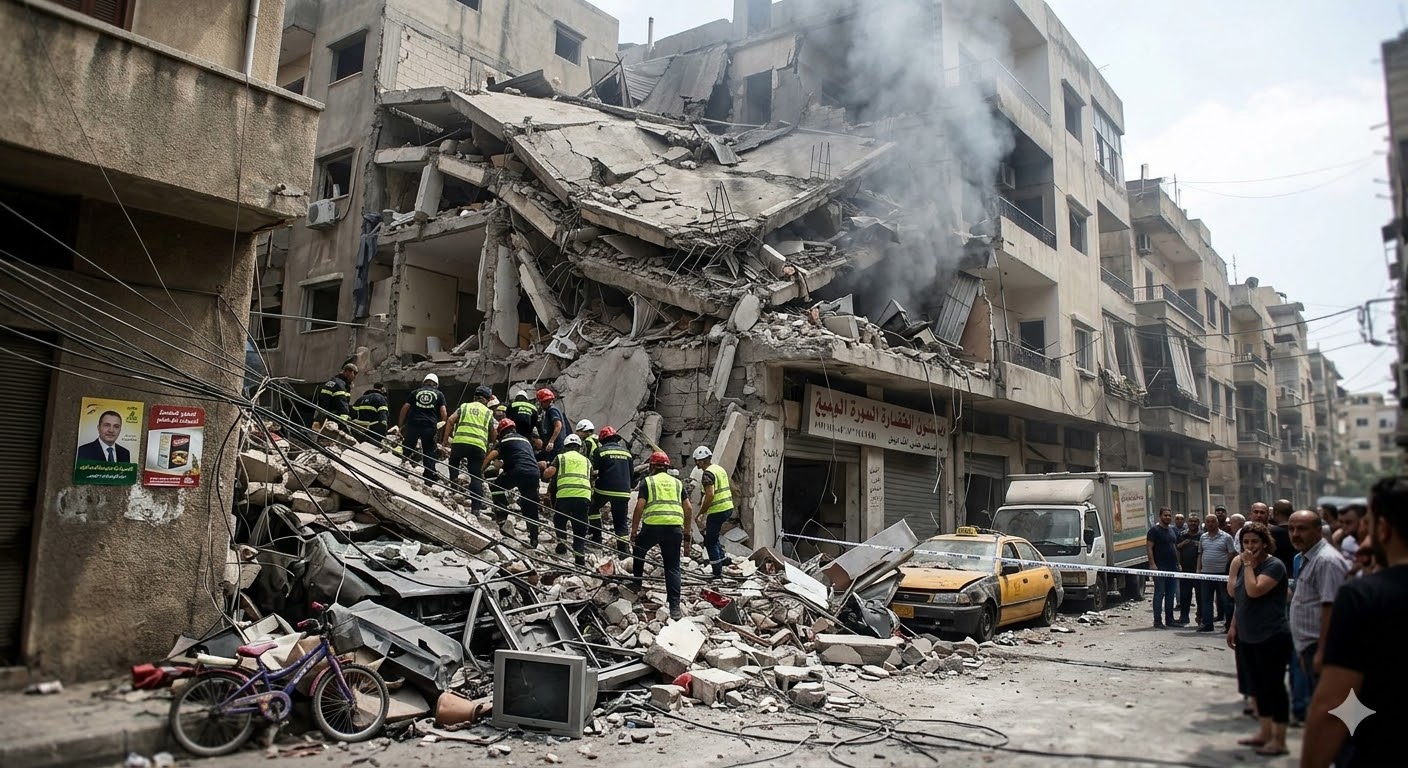
Israel Beirut strike attacks expanded early Wednesday after an Israeli air raid hit a residential building in central Beirut.
The Israel Beirut strike caused deaths and injuries while Israeli forces launched additional attacks across southern and eastern Lebanon.
Officials from the Lebanese Ministry of Public Health reported multiple casualties across several locations as bombardment continued overnight.
Residents in the Lebanese capital described widespread fear after the strike damaged apartments in the Beirut neighborhood of Aisha Bakkar.
Emergency teams transported injured civilians to nearby hospitals as fires burned inside the building.
Israel Beirut Strike Linked to Escalating Israel-Hezbollah Conflict
The Israel Beirut strike comes amid a rapidly escalating conflict between Israel and the Lebanese armed group Hezbollah.
Israeli military operations expanded across Lebanon after weeks of cross-border attacks along the frontier with Israel.
Israeli officials argue that the strikes aim to weaken Hezbollah’s military infrastructure and prevent further rocket attacks on northern Israeli communities.
Security analysts point to several factors driving the latest escalation:
- Hezbollah rocket launches targeting Israeli border towns
- Israeli air raids aimed at disrupting Hezbollah command centers
- Regional tensions linked to the wider Middle East conflict involving Iran
Israeli forces have increased air operations in southern Lebanon and the capital, including the Israel Beirut strike on a residential building in central Beirut.
Military observers note that the Israeli campaign focuses on locations where Hezbollah infrastructure is suspected to operate. However, strikes in densely populated urban areas have raised concerns about civilian casualties.
International organizations have warned that continued escalation could widen the conflict beyond Lebanon’s borders.
The United Nations has urged all parties to de-escalate and protect civilians as fighting intensifies.
Israel Beirut strike damages apartments in central Beirut
Rescue workers searched the damaged structure for survivors after the air raid.
Early reports indicate:
- Several apartments caught fire after the explosion
- Residents were trapped inside damaged floors
- Medical teams moved casualties to nearby hospitals
Local journalists on the ground reported that the building is located in a densely populated civilian area, not near known military facilities.
Families displaced from other parts of the city had been sheltering in the neighborhood before the strike.
Israeli air raids expand across Lebanon
Israeli forces launched additional strikes across several regions of Lebanon.
According to Lebanon’s National News Agency, attacks occurred in multiple towns overnight.
Reported incidents include:
- Air strikes in Baalbek district that killed several civilians
- A drone attack targeting a vehicle in Bint Jbeil
- Strikes on towns near Tyre
Health authorities confirmed additional casualties and injuries across these areas.
Civilian displacement rises as conflict intensifies
The Lebanese government estimates that hundreds of thousands of people have fled their homes during the latest escalation.
Officials warn that many families have moved toward central Beirut seeking safety.
Humanitarian agencies report several urgent needs:
- Emergency shelter for displaced families
- Medical supplies for hospitals treating victims
- Food and sanitation support for affected communities
The United Nations has called for immediate de-escalation to prevent further civilian suffering.
Hezbollah launches rocket fire toward Israeli positions
The armed group Hezbollah responded to the Israeli bombardment with rocket attacks targeting Israeli military positions near the southern border.
Military analysts warn that continued exchanges of fire could widen the conflict.
Recent casualty figures released by Lebanese officials show:
- Hundreds killed since renewed Israeli operations began
- More than one thousand injured
- Dozens of children among the dead
The conflict continues to raise international concern as civilian casualties grow.